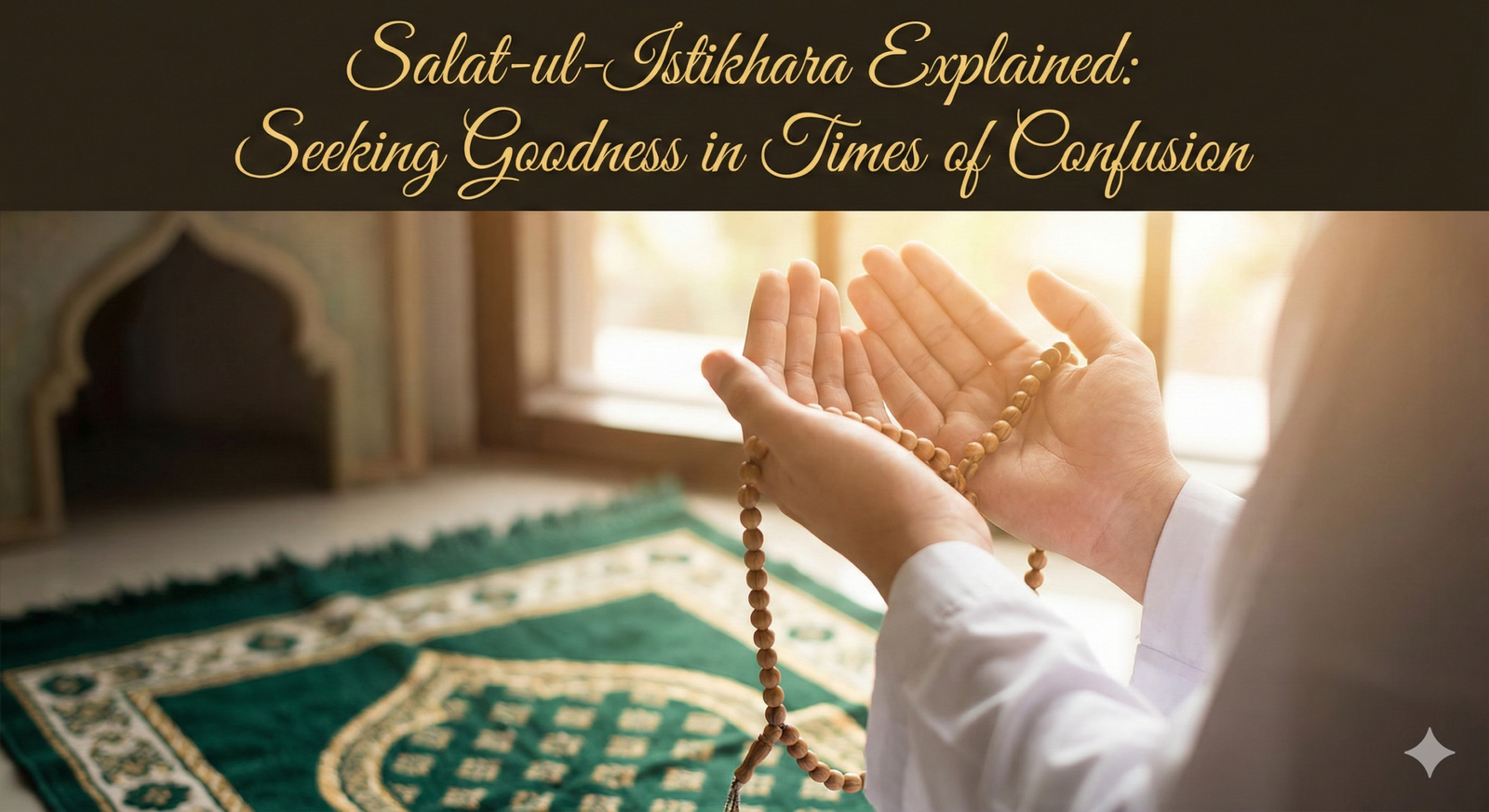
Salat-ul-Istikhara Explained: How to Seek Allah’s Guidance
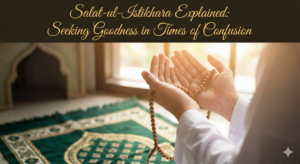
Life is full of decisions. From choosing a career path and getting married to making financial investments or planning a journey, we are constantly faced with choices that shape our future. As believers, we are blessed with a powerful tool to navigate these crossroads: Salat-ul-Istikhara.
But what exactly is Istikhara? Is it a magic wand that reveals the future in a dream? Or is it something deeper?
In this guide, we will explore the method, the meaning, and the correct mindset for performing this beautiful prayer.
What is Salat-ul-Istikhara?
Linguistically, Istikhara means “to seek goodness from Allah.” It is a prayer and supplication (Du’aa) offered by a believer to the Lord of the Worlds, asking for clarity and blessing in times of need or confusion.
The Prophet Muhammad (ﷺ) taught us this prayer as a way to hand over our affairs to the One who knows the unseen. He said:
“If one of you is concerned about some practical undertaking, or about making plans for a journey, he should perform two Raka’aats (cycles) of voluntary prayer.”
The Method
Perform Wudu (Ablution).
Offer two Raka’aats of voluntary prayer (Nafl).
Recite the Du’aa of Istikhara immediately after the prayer (raising your hands in supplication).
The Du’aa of Istikhara
Here is the supplication taught by the Prophet (ﷺ):
In Arabic: اللَّهُمَّ إِنِّي أَسْتَخِيرُكَ بِعِلْمِكَ، وَأَسْتَقْدِرُكَ بِقُدْرَتِكَ، وَأَسْأَلُكَ مِنْ فَضْلِكَ الْعَظِيمِ،
فَإِنَّكَ تَقْدِرُ وَلَا أَقْدِرُ، وَتَعْلَمُ وَلَا أَعْلَمُ، وَأَنْتَ عَلَّامُ الْغُيُوبِ.
اللَّهُمَّ إِنْ كُنْتَ تَعْلَمُ أَنَّ هَذَا الْأَمْرَ خَيْرٌ لِي فِي دِينِي وَمَعَاشِي وَعَاقِبَةِ أَمْرِي
– أَوْ قَالَ: فِي عَاجِلِ أَمْرِي وَآجِلِهِ –
فَاقْدُرْهُ لِي وَيَسِّرْهُ لِي ثُمَّ بَارِكْ لِي فِيهِ،
وَإِنْ كُنْتَ تَعْلَمُ أَنَّ هَذَا الْأَمْرَ شَرٌّ لِي فِي دِينِي وَمَعَاشِي وَعَاقِبَةِ أَمْرِي
– أَوْ قَالَ: فِي عَاجِلِ أَمْرِي وَآجِلِهِ –
فَاصْرِفْهُ عَنِّي وَاصْرِفْنِي عَنْهُ، وَاقْدُرْ لِيَ الْخَيْرَ حَيْثُ كَانَ ثُمَّ أَرْضِنِي بِهِ.
Transliteration: Allahumma innee astakheeruka bi’ilmika, wa astaqdiruka bi-qudratika, wa as’aluka min fadlika al-adheem. Fa-innaka taqdiru wa laa aqdir, wa ta’lamu wa laa a’lam, wa anta ‘allaamul-ghuyoob…
Translation: “Oh Allah! I seek Your guidance by virtue of Your knowledge, and I seek ability by virtue of Your power, and I ask You of Your great bounty. You have power; I have none. And You know; I know not. You are the Knower of hidden things.
Oh Allah! If in Your knowledge this matter is good for my religion, my livelihood and my affairs, immediate and in the future, then ordain it for me, make it easy for me, and bless it for me. And if in Your knowledge this matter is bad for my religion, my livelihood and my affairs, immediate and in the future, then turn it away from me, and turn me away from it. And ordain for me the good wherever it may be, and make me content with it.”
Common Misconceptions: Why Am I Still Confused?
A common frustration among many people is: “I prayed Istikhara, but I didn’t see a dream,” or “I am still confused.”
This confusion often stems from how we view the purpose of the prayer. Scholars generally categorize the understanding of Istikhara into two main views. Understanding these can change your entire perspective.
View 1: Seeking a Sign (Guidance)
The most common understanding is that Istikhara is a request for a specific sign. The person hopes that after the prayer, their heart will incline strongly toward one option (e.g., taking the job vs. rejecting it).
While this is valid, it can lead to distress if:
You feel no inclination either way.
You make a decision but face immediate difficulties.
If you follow this view and feel no inclination, scholars suggest repeating the prayer multiple times until clarity comes.
View 2: Seeking Goodness (The Shafi’ee Insight)
A profound insight, favored by scholars like Maulana Ashraf Ali Thanvi (influenced by Shafi’ee scholars), suggests a different approach: Istikhara is not just about “knowing” the future, but about “blessing” the decision.
In this view, Istikhara is a Du’aa asking Allah to:
Put goodness (Khair) in whatever happens.
Facilitate the path if it is good.
Block the path if it is bad.
Why is this view comforting? If you pray Istikhara and still face difficulties, it does not mean the prayer failed. It means Allah is answering your Du’aa by either diverting you from a hidden harm or testing you to elevate your rank. It removes the pressure of waiting for a “miraculous sign.”
How to Trust the Outcome
Whether you view Istikhara as seeking a sign or seeking a blessing, the ultimate goal is Tawakkul (Trust in Allah).
Use Your Intellect: This world is Darul Asbaab (a world of means). Allah expects us to use our logic, consult wise people (Mashwara), and do our research before and after praying.
Accept the Decree: As the Prophet (ﷺ) taught us to say at the end of the Du’aa: “and make me content with it.”
Don’t Fear Difficulty: Even the “right” path chosen through Istikhara may have bumps. These are not signs of failure, but steps in your destiny written by the One who knows best.
Conclusion
We should never make a major life decision without consulting our Creator. Whether you are seeking a specific sign or simply asking Allah to bless your next step, perform Salat-ul-Istikhara with a sincere heart.
Trust that Allah’s mercy is infinite. He may guide you through a dream, a feeling in your heart, or simply by unfolding events in a way you didn’t expect. Whatever the outcome, know that the path ordained for you is where your ultimate goodness lies.