In Islam, five times a day, we enter an audience infinitely more important: standing before Allah, the Creator of the heavens and the earth, in Salah (prayer).
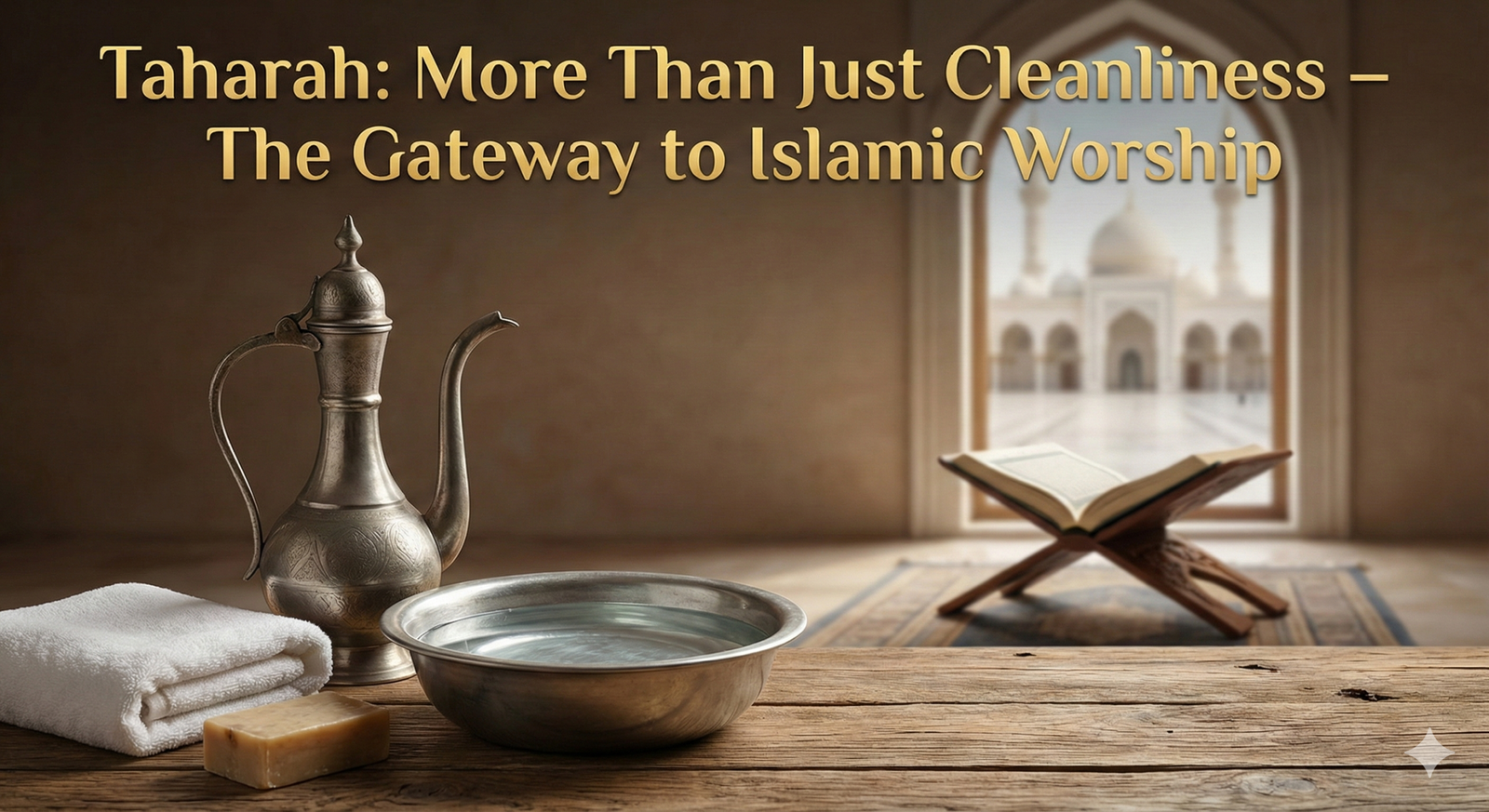
This preparation to meet Allah is called Taharah (الطهارة). While often translated simply as “purification” or “cleanliness,” Taharah in Islam is a profound concept that goes far beyond soap and water. It is a state of physical and spiritual readiness that is essential for a believer’s life.
The Prophet Muhammad (peace be upon him) highlighted its immense importance when he said:
“Cleanliness is half of faith (Emaan).” [Sahih Muslim]
But what exactly is Taharah, and why is it half of our faith?
The Two Wings of Taharah: Outer and Inner
In Islam, humans are body and soul. Therefore, true purification must address both. Taharah is divided into two inseparable parts:
1. Physical Taharah (Taharah of the Body)
This is what most people think of first. It is the ritual purification required before performing certain acts of worship, most notably the prayer (Salah) and touching the Quran. It involves removing physical impurities (Najasa) from our body, clothes, and place of prayer, and performing ritual washing (like Wudu or Ghusl).
Why it matters: You cannot approach the prayer in a state of physical impurity. It teaches discipline, hygiene, and respect for the act of worship.
2. Spiritual Taharah (Taharah of the Heart)
This is the purification of the heart from spiritual diseases like arrogance, jealousy, hypocrisy, and hatred. It also means cleansing the soul from sins through repentance (Tawbah).
The Connection: While physical Taharah is a condition for your prayer to be valid, spiritual Taharah is what makes your prayer meaningful. A clean body with a heart full of arrogance is incomplete. Islam teaches us that outer cleanliness should reflect inner purity.
The Key Rituals of Physical Taharah
For a new Muslim or someone learning the basics, understanding the types of physical purification is the first practical step. We will cover these in detail in future guides, but here is a brief overview:
1. Wudu (Ablution – The Minor Purification) This is the ritual washing performed before daily prayers. It involves washing the face, arms, wiping the head, and washing the feet in a specific manner. It is needed after minor breaks in purity (like using the restroom, passing gas, or deep sleep).
2. Ghusl (The Full Bath – The Major Purification) This is a complete ritual bath where water must reach every part of the body. It is required after major events, such as marital intimacy or the end of the menstrual cycle.
3. Tayammum (Dry Ablution) Islam is a religion of ease. If water is unavailable, or using it would cause harm due to illness, Allah allows us to perform Tayammum. This involves striking clean earth (dust/sand) with the hands and wiping the face and arms. It shows that the intention to purify is what matters most.
Conclusion: A Refreshing Act
Taharah should never feel like a burden. It is a blessing. In a chaotic and often spiritually polluting world, acts like Wudu serve as regular “refresh buttons” for our day. They wash away physical dirt and minor sins, allowing us to stand before Allah feeling renewed, focused, and spiritually clean.
Embrace Taharah not just as a rule, but as a beautiful preparation for connecting with your Creator.