Fasting is a Shield, Not a Burden
Ramadan is the most anticipated month of the year. It is a time for spiritual cleansing, connection with the Quran, and discipline. However, for many Muslims—especially those living in the West or new to the faith—the fear of accidentally breaking the fast can become a source of anxiety (Waswasa).
You might find yourself asking: Did that drop of water invalidate my day? Can I use my asthma inhaler? What if my gums bleed?
At Quran Mubeen Academy, we believe that worship should be based on knowledge, not fear. Allah (SWT) says in the Quran: “Allah intends for you ease and does not intend for you hardship” (2:185).
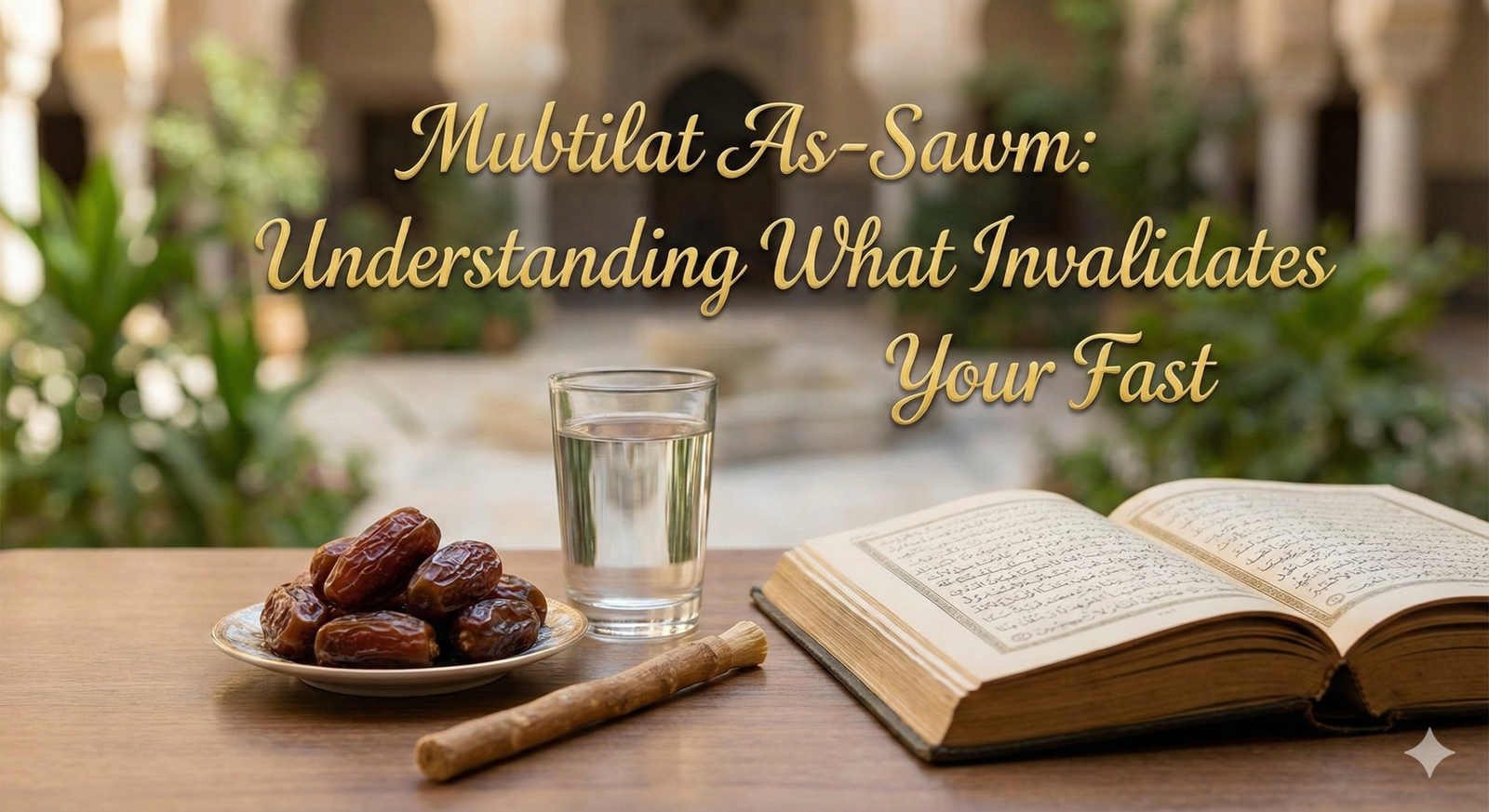
In this comprehensive guide, our Azharian scholars break down the Nullifiers of Fasting (Mubtilat al-Sawm) into clear categories: the agreed-upon major nullifiers, modern medical issues, and common myths that do not break your fast.
The Major Nullifiers (The Agreed-Upon Rules)
These are the actions that universally invalidate the fast if done intentionally and while remembering that one is fasting.
1. Intentional Eating and Drinking
This includes consuming anything that reaches the stomach through the mouth or nose.
-
The Rule: If you eat or drink on purpose, your fast is broken. You must make up the day (Qada) and sincerely repent.
-
The Exception: If you eat or drink out of forgetfulness, your fast is valid. The Prophet (PBUH) said: “Whoever forgets he is fasting and eats or drinks, let him complete his fast, for it is Allah Who has fed him and given him drink.” (Bukhari & Muslim).
2. Sexual Intercourse (Jima’)
This is the most severe violation of the fast during daylight hours.
-
The Consequence: It not only breaks the fast but requires a severe penalty (Kaffarah): fasting for 60 consecutive days or feeding 60 poor people if unable to fast.
-
Note: Intimacy (hugging, kissing) between spouses is permissible as long as it does not lead to intercourse or ejaculation.
3. Intentional Vomiting (Al-Qay’)
-
Forced Vomiting: If you deliberately make yourself vomit (by putting a finger in your throat or smelling something gross), the fast is broken.
-
Unintentional Vomiting: If you are sick and vomit naturally, your fast remains valid. Do not break it; wash your mouth and continue your day.
4. Menstruation (Hayd) and Post-Natal Bleeding (Nifas)
For women, the presence of menstrual or post-natal blood invalidates the fast immediately, even if it appears minutes before Maghrib.
-
The Wisdom: This is a mercy from Allah to protect women’s health. It is haram to fast in this state.
-
Action: The woman must break her fast and make up (Qada) the missed days after Ramadan.
Modern Medical Questions (The Gray Area)
Living in the 21st century comes with medical advancements that didn’t exist in early Islamic history. Here is the ruling on common medical procedures.
1. Injections and IV Drips
Does a needle break the fast? It depends on what is in the needle.
-
Nutritional Injections (IV Fluids/Vitamins): YES, these break the fast because they replace food and drink, providing energy to the body.
-
Medical Injections (Insulin, Penicillin, Vaccinations): NO, these generally do not break the fast because they are not “food” and do not enter the stomach via the throat. (This is the fatwa of the majority of modern scholars and Fiqh academies).
2. Asthma Inhalers
-
Pressurized Inhalers: Most scholars agree that if the inhaler releases a mist/spray that reaches the throat and stomach, it breaks the fast.
-
The Solution: If you have a severe attack, use the inhaler to save your health (safety comes first), and make up the day later. If you need it daily, consult a scholar about Fidyah (feeding a poor person instead).
3. Eye and Ear Drops
-
The Ruling: Generally, these do not break the fast.
-
Condition: If you use nose drops or ear drops and taste the liquid in your throat, it is safer to make up that day. However, eye drops are almost universally accepted as safe.
4. Dental Work and Blood Tests
-
Blood Draw: Taking blood for a test does not break the fast.
-
Dentist Visit: Permissible, provided you do not swallow any water or medicine.
Common Myths (Things That Do NOT Break Your Fast)
Shaitan often whispers doubts to make your worship feel invalid. Here are things that are perfectly fine to do:
-
Swallowing Saliva: This is natural and unavoidable. It does not break the fast.
-
Using Toothpaste/Miswak: You can brush your teeth. Just be careful not to swallow the paste. Using a Miswak is actually a Sunnah.
-
Tasting Food for Cooking: A cook (mom or dad) can taste the food with the tip of the tongue to check salt/spice, provided they spit it out and do not swallow.
-
Taking a Shower/Swimming: Water entering the ears or touching the skin does not break the fast. Just ensure you don’t swallow water while swimming.
-
Wearing Perfume or Incense: Smelling pleasant scents is allowed.
-
Bleeding Gums or Nosebleeds: Unintentional bleeding does not invalidate the fast.
The Golden Rule (Certainty vs. Doubt)
In Islamic Fiqh, there is a powerful maxim: “Certainty is not removed by doubt.” (Al-Yaqin la Yazulu bish-Shakk).
-
Scenario: If you are fasting and you doubt whether you swallowed water during Wudu, assume you did not. Your fast is valid until you are 100% certain it broke.
-
Scenario: If you doubt whether the sun has set or not, do not eat until you are certain.
Conclusion: Seek Knowledge to Fast with Confidence
Ramadan is too precious to be spent in worry and doubt. By learning the Fiqh of fasting, you liberate your mind to focus on what truly matters: Khushoo (Devotion), Quran, and Charity.